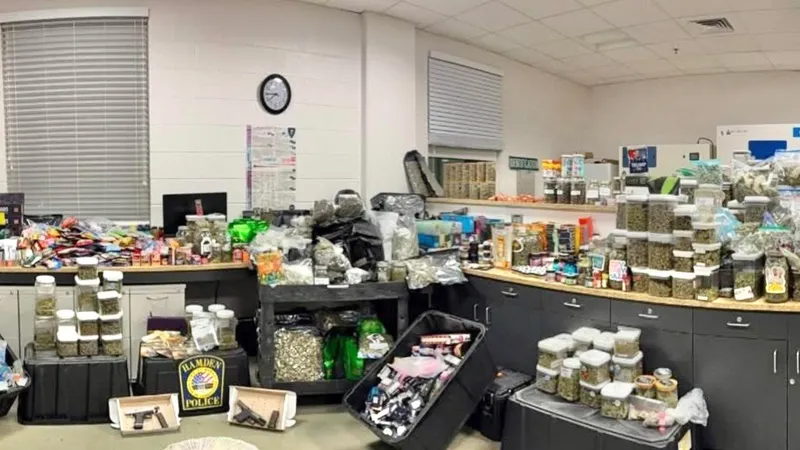
Psilocybin Case Raises Questions About Destroyed Evidence and Limited Testing
That is the sentence imposed in a Connecticut criminal case involving psilocybin mushrooms and an alleged large-scale operation producing psilocybin and THC products.
Front Page › Who's Who › Federal
7 stories mention Federal. Mentions are matched automatically from headlines and summaries.
That is the sentence imposed in a Connecticut criminal case involving psilocybin mushrooms and an alleged large-scale operation producing psilocybin and THC products.
That is the date the United States government was granted U.S. Patent No. 6,630,507 for cannabinoids, formally recognizing them as compounds with medical value, including antioxidant and neuroprotective properties with potential applications in conditions such as Alzheimer’s disease, Parkinson’s disease, and stroke.
O’Dea is pointing directly at cultivation concerns in the regulated market and acknowledging a reality policymakers rarely say out loud: the legacy market hasn’t gone anywhere, for a reason.
Connecticut has moved to classify kratom; a natural plant used by thousands of residents…as a Schedule I controlled substance, placing it in the same legal category as heroin.
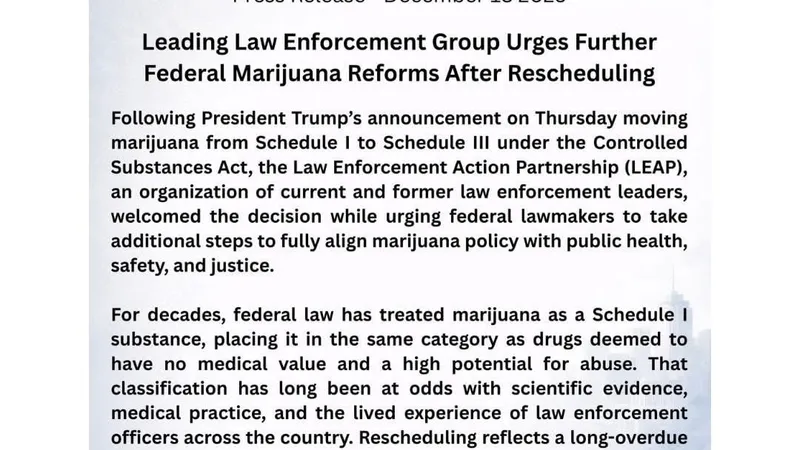
A national organization of current and former law enforcement leaders is warning that today’s federal move to reclassify marijuana does not go nearly far enough—and risks preserving many of the same harms that cannabis reform was supposed to fix.
Federal officials are once again signaling a shift in cannabis policy — this time through rescheduling marijuana under the federal Controlled Substances Act (CSA). While some national organizations and industry voices are celebrating the move as “progress,” the reality is far less encouraging.
HB 7181 Makes It Only a Matter of Time Before the DEA and CT Police Show Up at Homegrowers’ Doors - 11.26.2025