
Shelton's 'Zero Tolerance' Crackdown Exposes a Broken System
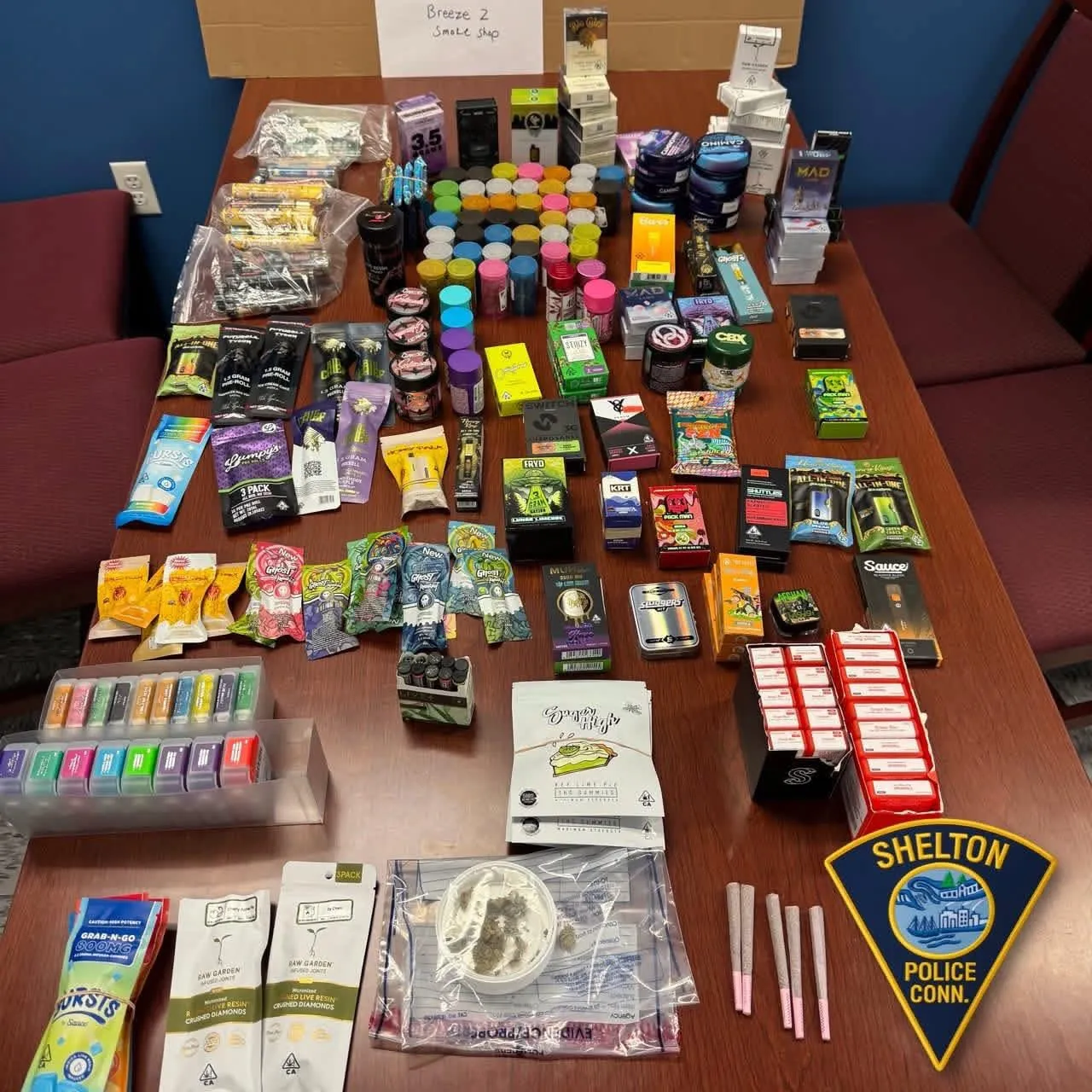
The Shelton Police Department issued a press release today announcing the seizure of a combined 4.75 pounds of cannabis products from two small convenience stores on Bridgeport Avenue. Neither store sold to minors. Neither clerk broke any criminal law involving youth access. Both cooperated fully.
Part of Cannabis Enforcement and the DIA Map
Opinion. This piece expresses the view of the publication. It is labeled so readers can distinguish it from news reporting.
December 9, 2025 | CT CannaTimes Editorial Desk
The Shelton Police Department issued a press release today announcing the seizure of a combined 4.75 pounds of cannabis products from two small convenience stores on Bridgeport Avenue. Neither store sold to minors. Neither clerk broke any criminal law involving youth access. Both cooperated fully.
Their only “crime”? Trying to sell cannabis in a state that makes legal entry nearly impossible.
Prohibition Logic in a Legal State
Connecticut officials continue to use prohibition-style enforcement against low-level businesses while simultaneously restricting legal markets to a handful of corporations and politically connected applicants.
Shelton’s statement ends with the line:
“Not in our city, not now, not ever.”
But the truth is simpler:
If residents had accessible, reasonably priced legal cannabis in their own communities, nobody would be buying unregulated edibles out of a convenience store display in the first place.
This isn’t criminal behavior. It’s economic desperation created by the state’s own policy failures.
The State Built the Demand for “Illegal” Cannabis
Since adult-use legalization in 2021, Connecticut has:
-
Set sky-high license fees
-
Created confusing zoning restrictions
-
Allowed only a small circle of operators to dominate the market
-
Maintained punitive rules against small retailers, caregivers, and growers
-
Kept prices at some of the highest in the country
-
Criminalized gifting, homegrow freedom, and independent cultivators
-
Limited municipal choice through vague opt-out and zoning powers
When access is restricted, consumers do what consumers always do: they look for alternatives. Convenience stores didn’t create the illicit market — the state did.
And while the state calls it “illegal,” in most other legalized states this same conduct would be a minor civil infraction or a business-permit penalty.
Zero Tolerance for Whom?
Shelton’s “zero tolerance” policy is aimed squarely at small shops, not the massive corporate operators who have repeatedly violated testing, labeling, and advertising laws with little more than warning letters.
Let’s be honest:
-
No raids for mislabeled THC percentages in corporate products
-
No multi-agency task forces for statewide lab scandals
-
No door-kicking over inflated potency claims from multimillion-dollar brands
But two small immigrant-owned convenience stores?
Send in the federal partners and seize a few pounds.
This isn’t public safety. It’s selective enforcement.
Arrest Warrants for What Should Be a License Process
The press release proudly states that arrest warrants will be sought for the business owners.
Over cannabis. In 2025. In a supposedly “legal” state.
If these businesses had access to affordable licensing pathways, they would have taken them. Connecticut made sure they couldn’t.
A Better Path Forward
Instead of criminalizing the predictable result of a dysfunctional licensing structure, Connecticut should:
- Open licensing universally to small retailers
- Allow micro-dispensaries and caregiver storefronts
- End punitive zoning blocks
- Reduce license costs and regulatory barriers
- Reinstate true homegrow freedom
- Treat minor noncompliance as business violations, not criminal acts
Give people a legal pathway, and they’ll use it.
CT CannaTimes Position
Shelton’s raid isn’t the story of two reckless shop owners. It’s the story of a broken system that forces people into a corner and then punishes them for standing there.
Connecticut can’t claim to have “legalized” cannabis while still enforcing prohibition for anyone outside the corporate circle.
If the state truly wants to stop unlicensed sales, the solution is simple: Open the market. Let people in. Stop criminalizing what you refuse to regulate fairly.
This story was originally published by Connecticut CannaTimes on Facebook on December 10, 2025 and was migrated to this website on October 16, 2026. The publication date above is the original date.
More in Cannabis Enforcement and the DIA Map
The full investigation- Nearly 97% of Documented Cannabis Raids Happened Inside or Within Five Miles of a DIAOctober 17, 2026 · Enforcement
- Crisp Cannabis President Charged With Animal Cruelty After Dogs Left in Locked Car, Police SaySeptember 17, 2026 · Courts
- Would Fentanyl Survive a Burning Joint? Examining the “Fentanyl-Laced Cannabis” ClaimJune 10, 2026 · Enforcement
Related Stories

Hi! People and Emerald Lounge: A Grand Opening That Reveals Unequal Enforcement
There is no scenario in which an ordinary Hartford resident could light up cannabis outside a storefront, 20–25 feet from a business entrance, without risking a citation or confrontation. Public consumption rules are enforced aggressively. Municipal police, DCP, and the Clean Indoor Air Act all restrict where an individual can smoke — and lower-income communities feel this enfo
Bridgeport Police Say Cannabis Tested Positive for Fentanyl. The Charges Raise Questions.
Bridgeport Police announced this week that cannabis and THC products seized from Dice Convenience Smoke Shop at 4016 Main Street “tested positive for the presence of fentanyl.”
Every Can of THC Seltzer Sold in Connecticut Funds Enforcement, Not Patients
When most Connecticut consumers pick up a can of THC seltzer, they assume they’re supporting a legal industry, small businesses, or the state’s cannabis program. But every single can sold in the state — every individual beverage — sends $1 straight into the Connecticut Cannabis Enforcement Account.
Popsicles Over Patients? East Hartford's 'Copsicle' Truck and Cannabis Tax Money
East Hartford, CT — The East Hartford Police Department recently unveiled a new community outreach tool funded by cannabis revenue: an ice cream truck, dubbed the “Copsicle,” where officers hand out free frozen treats to kids.